Colonyworking title
Stay in the capsule. Work outside through the robot.
You are stranded alone on an airless planet. Dust storms cover the valley, there is no compass and no satellites. A small scanner and a telepresence robot are how you find your way.
Early prototype · PC
WEATHER
The storm is the enemy
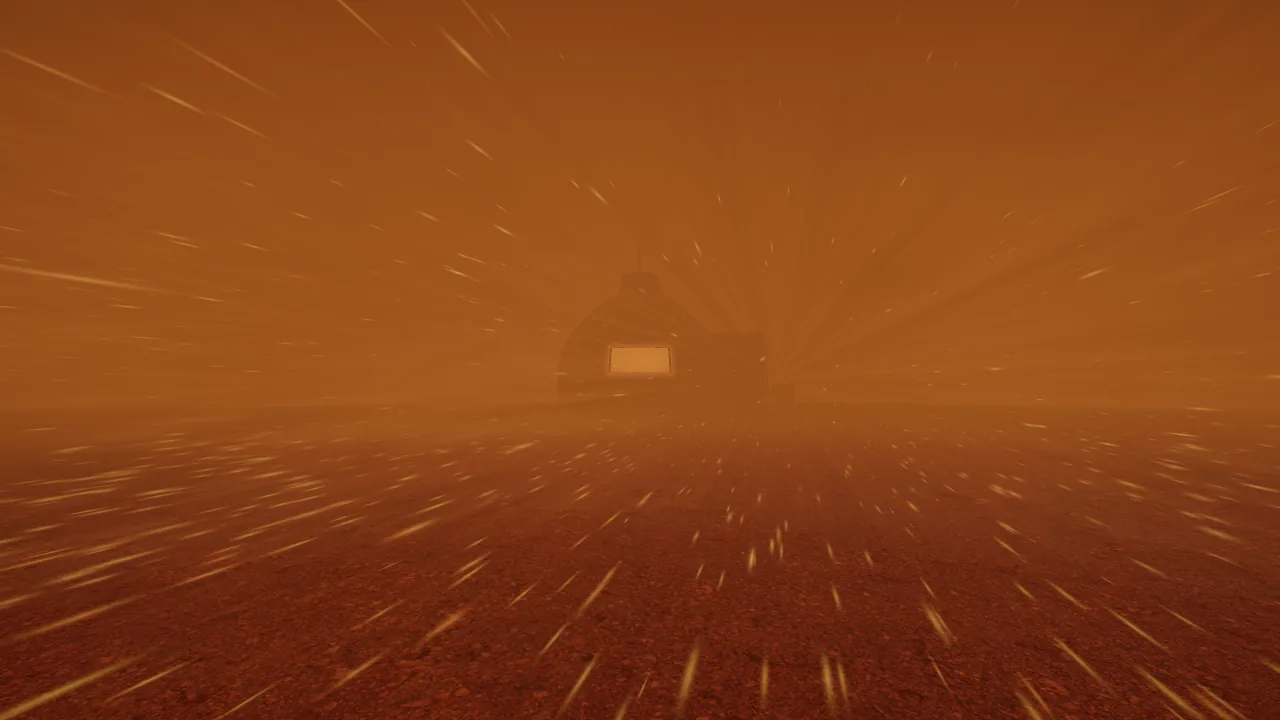
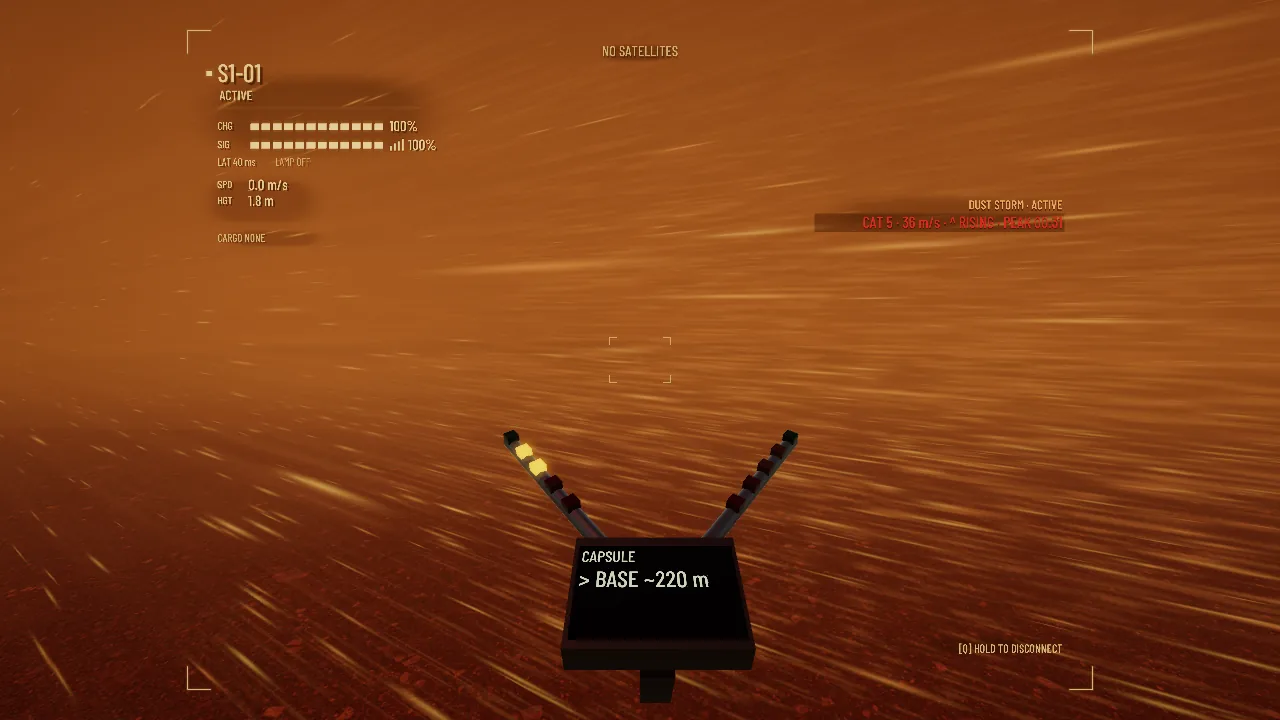
Dust storms come in five categories. A storm starts with a warning: the type, the direction and the time to the front. Then the light turns red and dim, sand streaks across the view, and visibility drops from 40 m to 10 m. In strong gusts the robot holds on to the rocks.
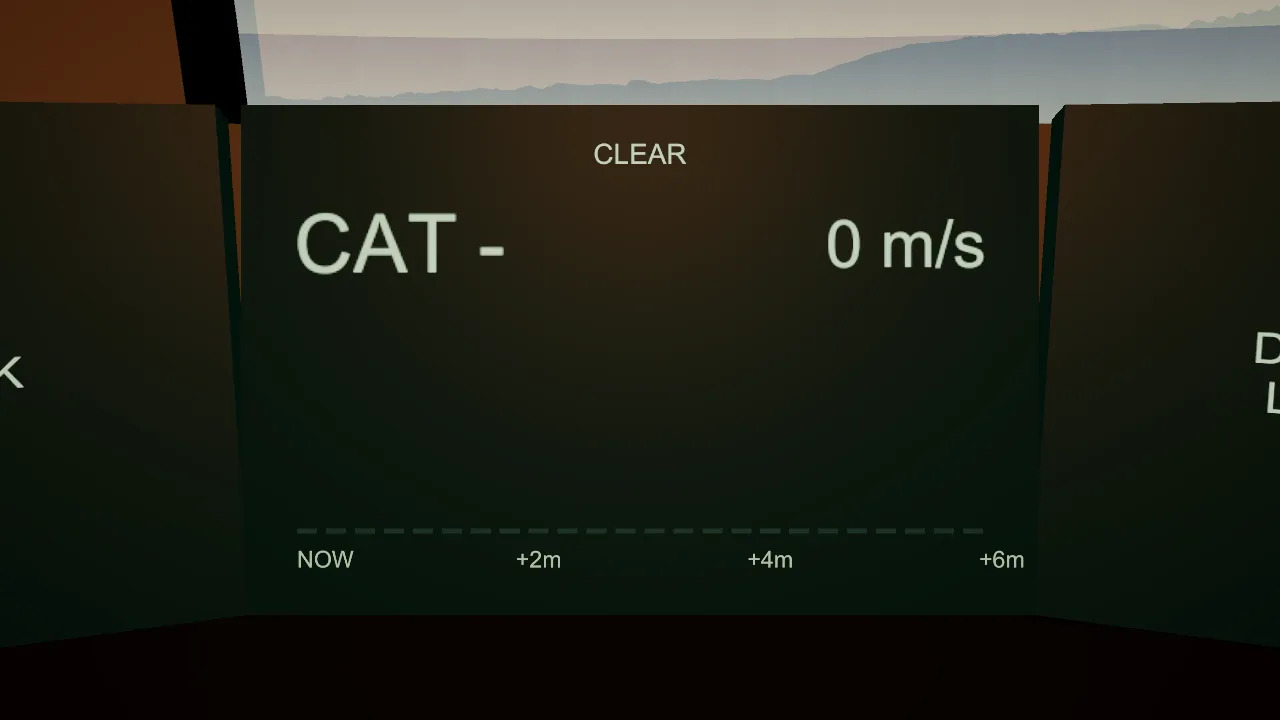
The forecast screen in the capsule. All clear.
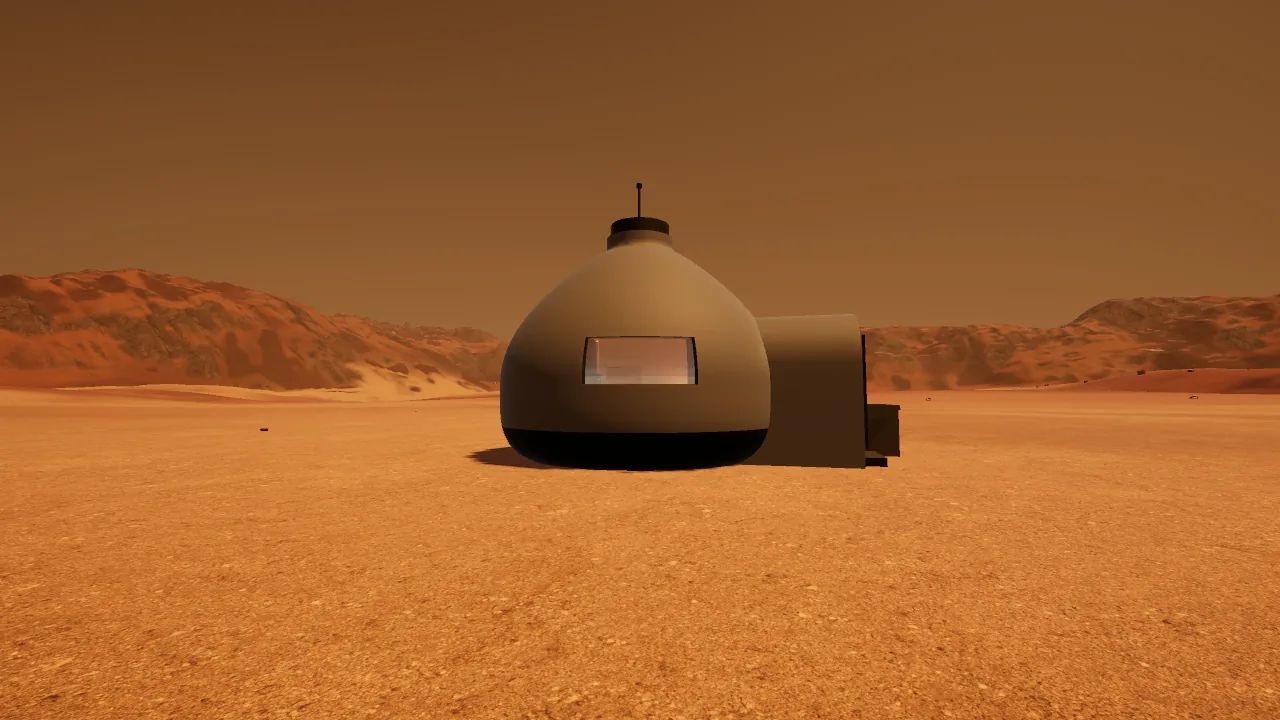
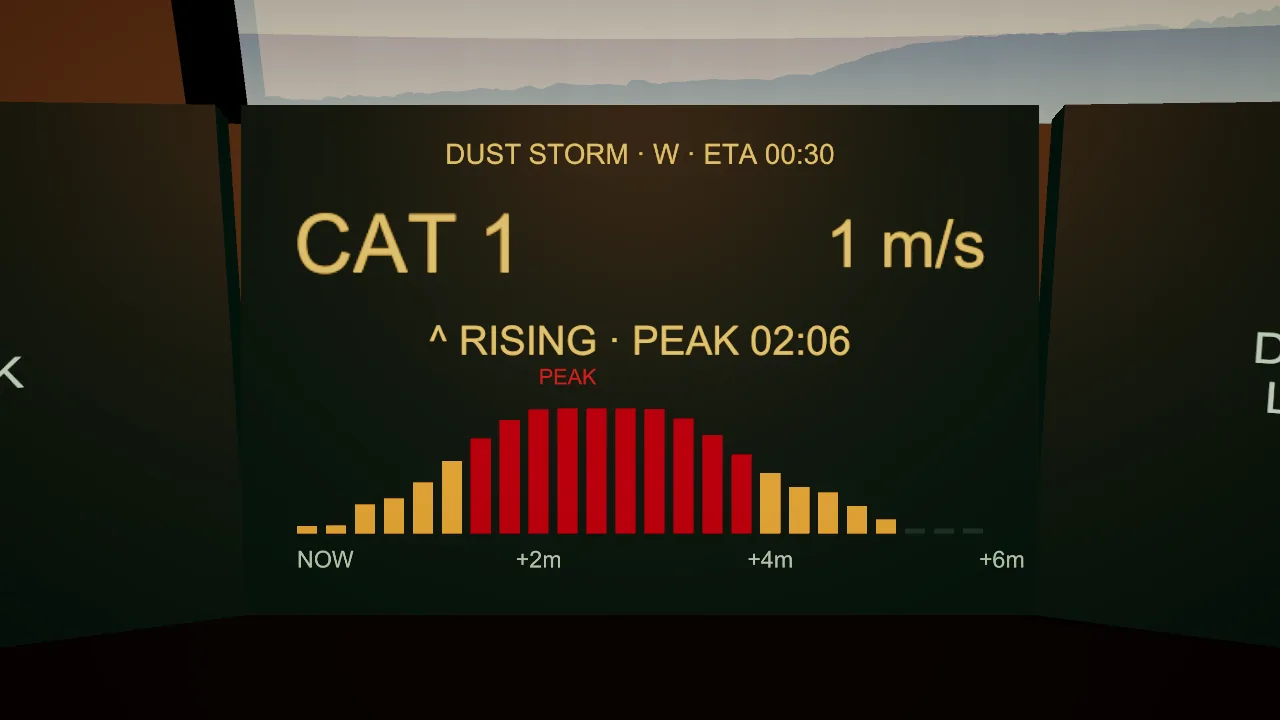
A warning: a storm from the west, the time until it arrives, and when it will peak.
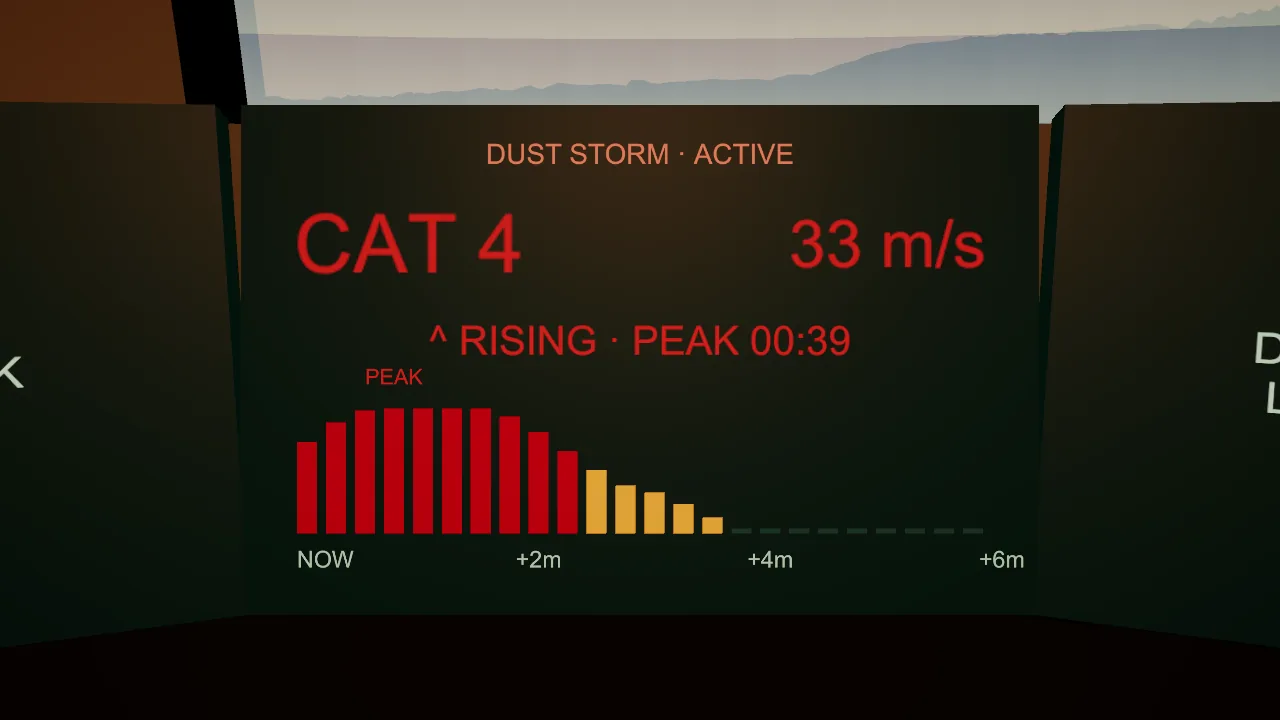
Category 4. From 15 m the capsule is only a shape in the dust.
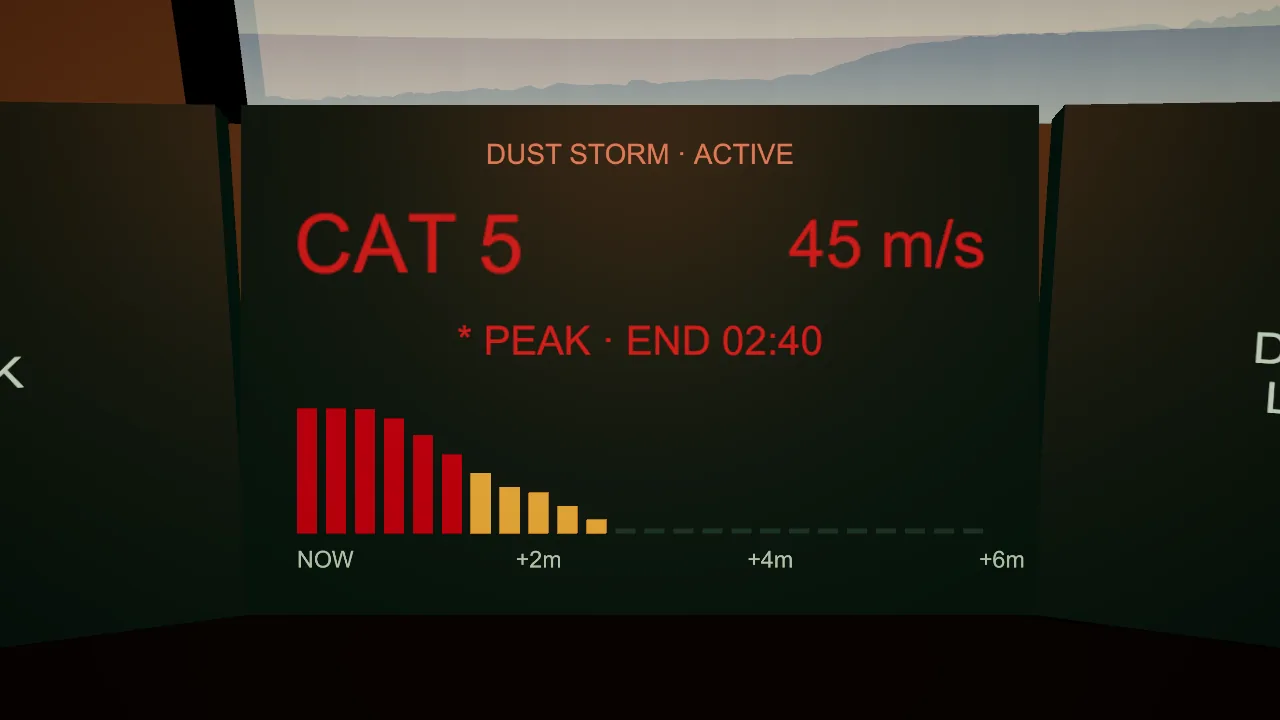
The peak. Through the robot's camera there is almost nothing left to see.
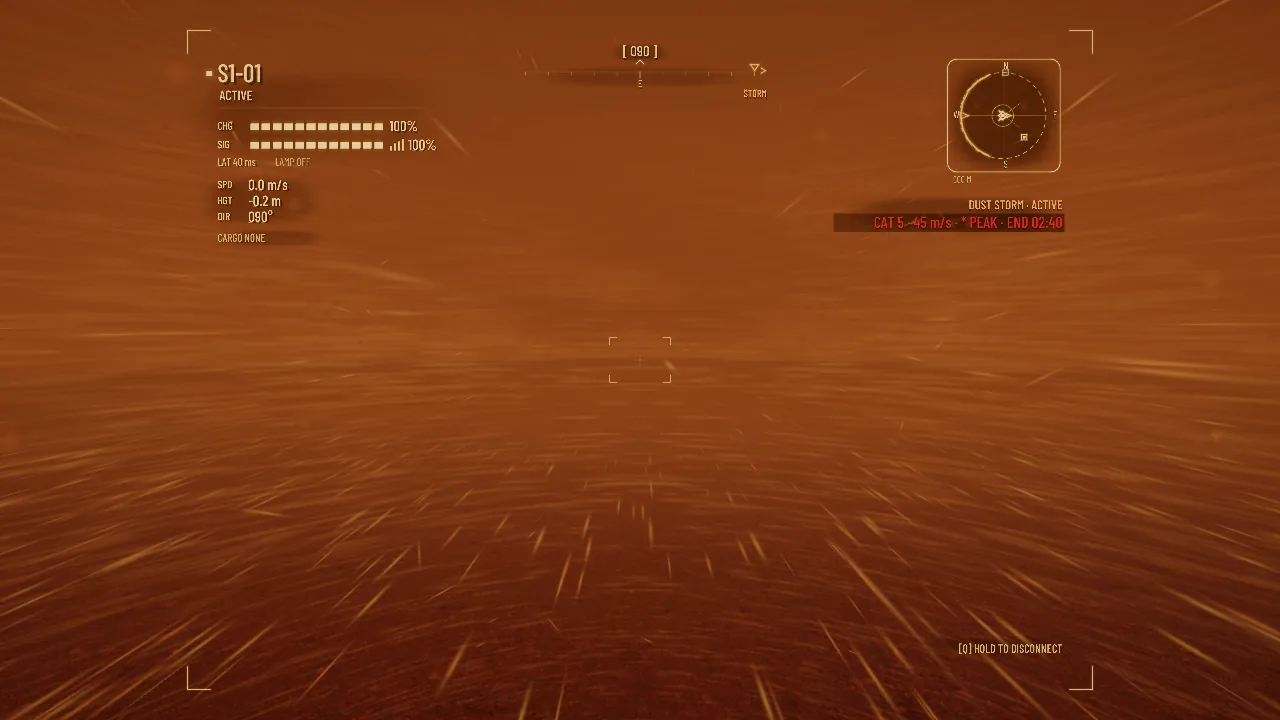
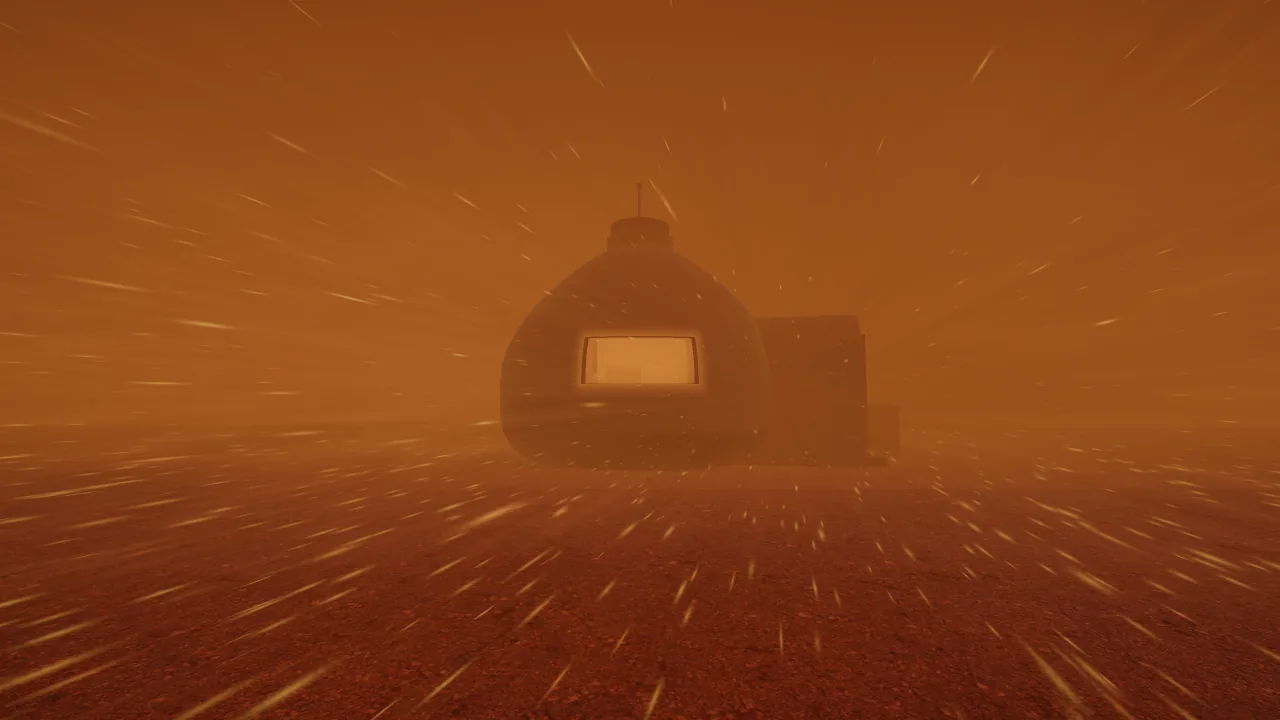
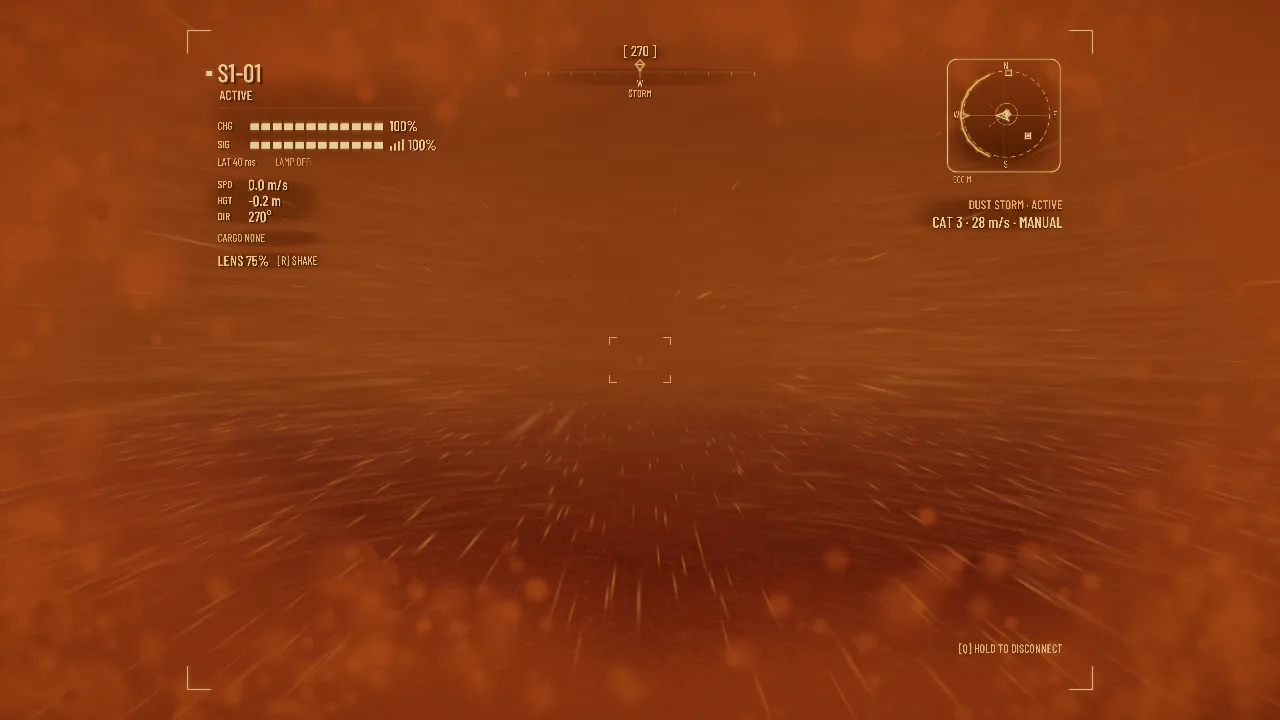
Dust settles on the robot's lens and on the capsule window.
NAVIGATION
No compass, no satellites
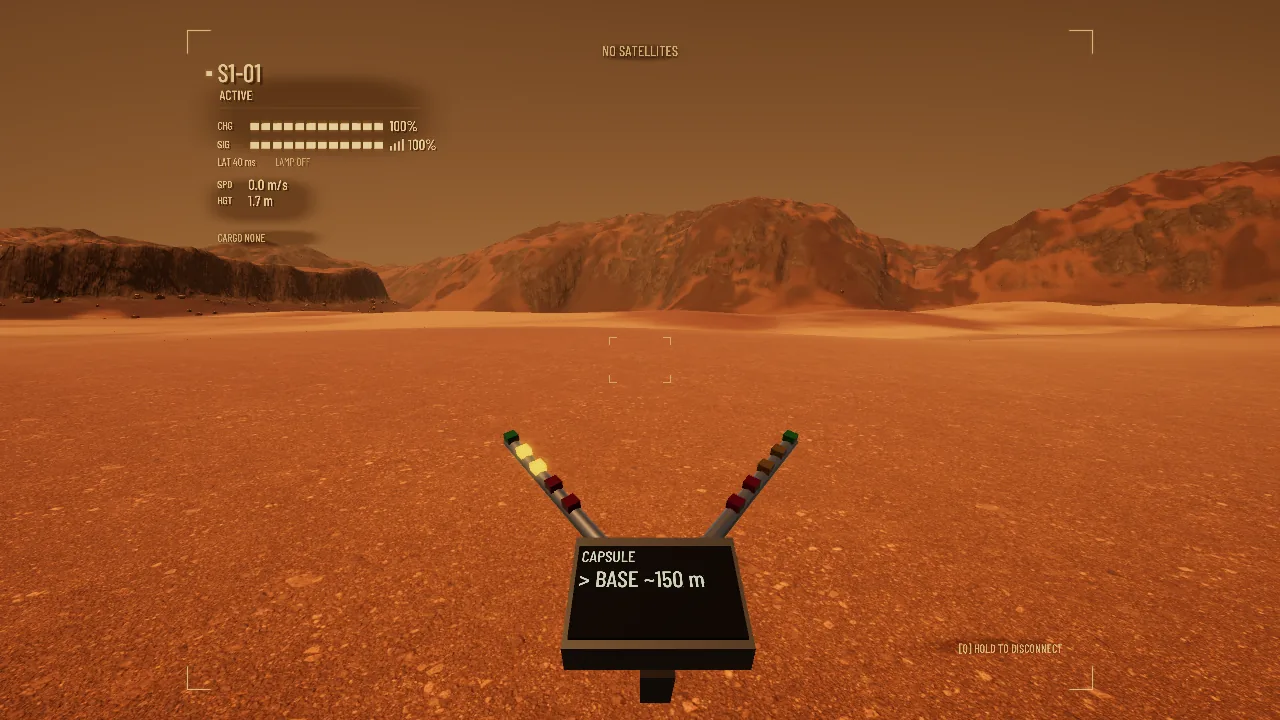
The planet has no magnetic field, so a compass is useless, and there are no satellites yet. Where the map would be, the HUD says NO SATELLITES.
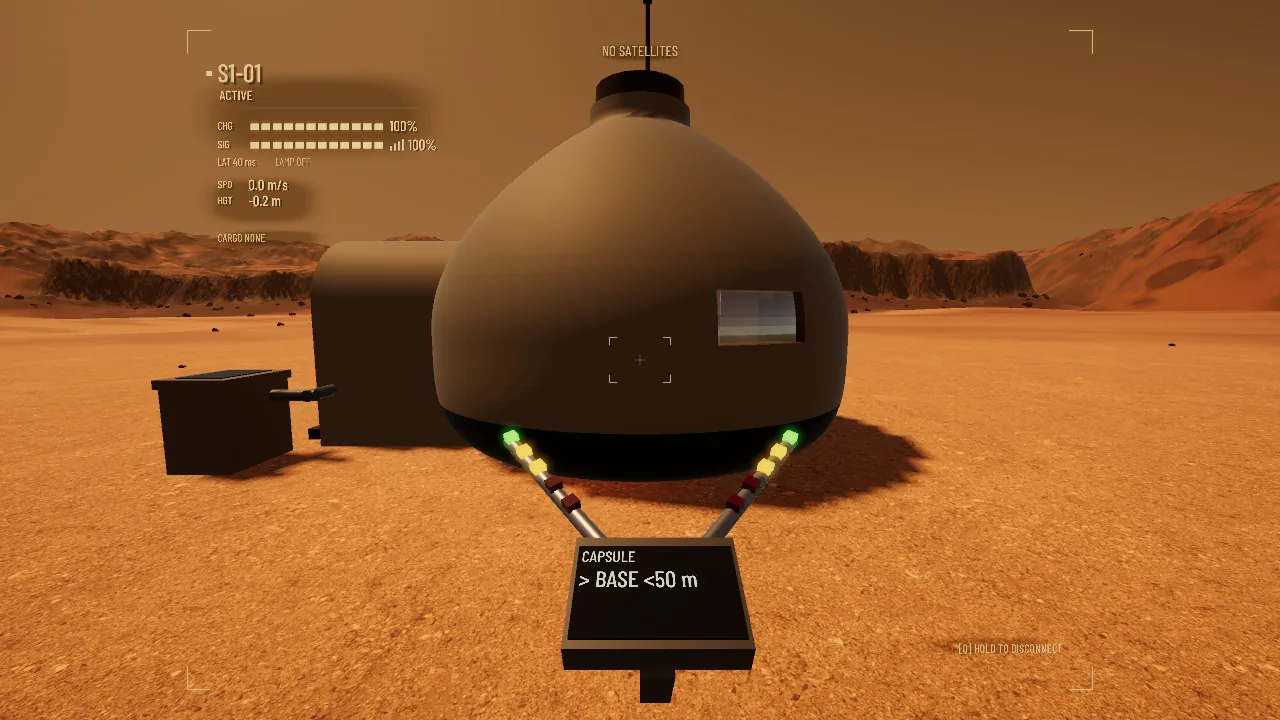
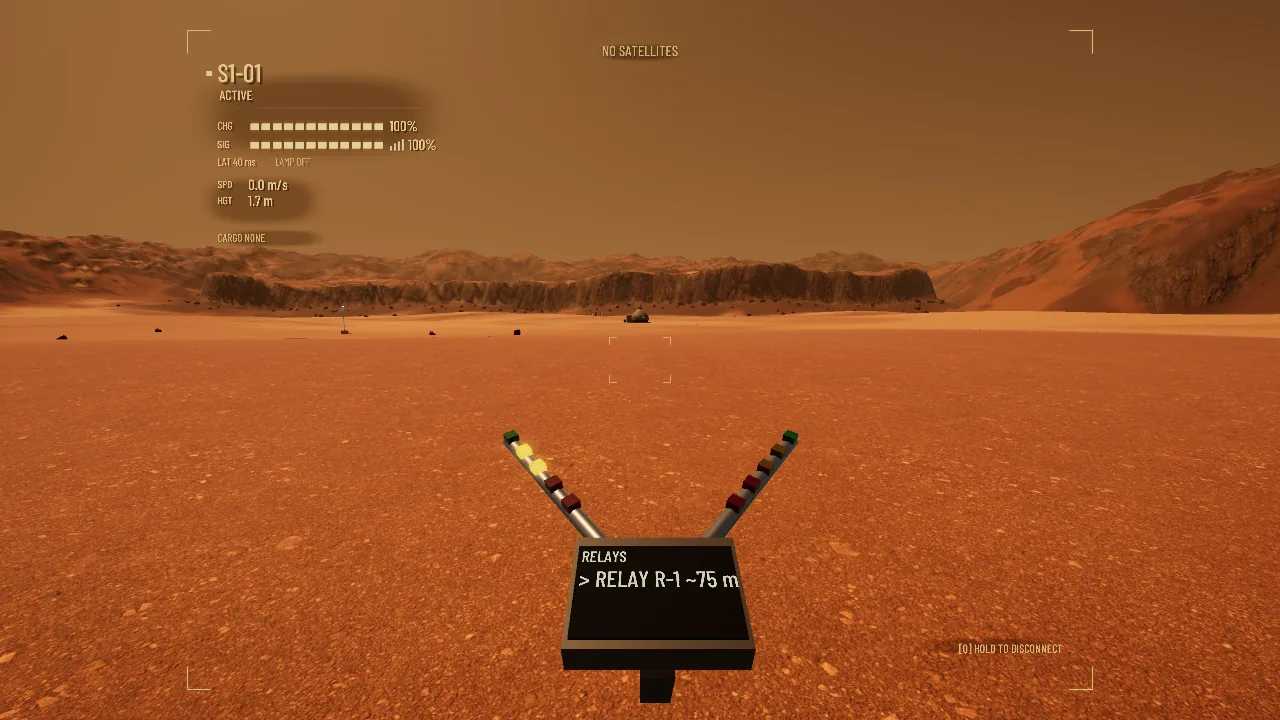
To find the way home you hold up a slingshot-shaped scanner. It hears the capsule's beacon and the relays, like a radio direction finder, and its LEDs tell you where to turn. Each blink comes with a quiet beep.
- Red blinking on both whiskers: searching, no target yet.
- Yellow on one whisker: the target is that way, turn.
- Yellow on both: straight ahead, walk. Faster blinking means closer.
- Green on both: you are there.
The screen shows the mode and a rough distance. In a storm the signal is weaker, so the capsule seems further away than it is.
TELEPRESENCE
You never leave the capsule
Put on the telepresence helmet and the link boots up: “TELEPRESENCE LINK… CAMERA ON”. From now on you see through the robot's camera.
The further the robot goes, the weaker the signal and the longer the delay. A storm makes both worse, and the radio glitches on the feed.
The first loop: the robot carries ore, the printer prints a relay, and the relay pushes the signal further out.
- ore
- printer
- relay
- longer range
SUIT
Suit up
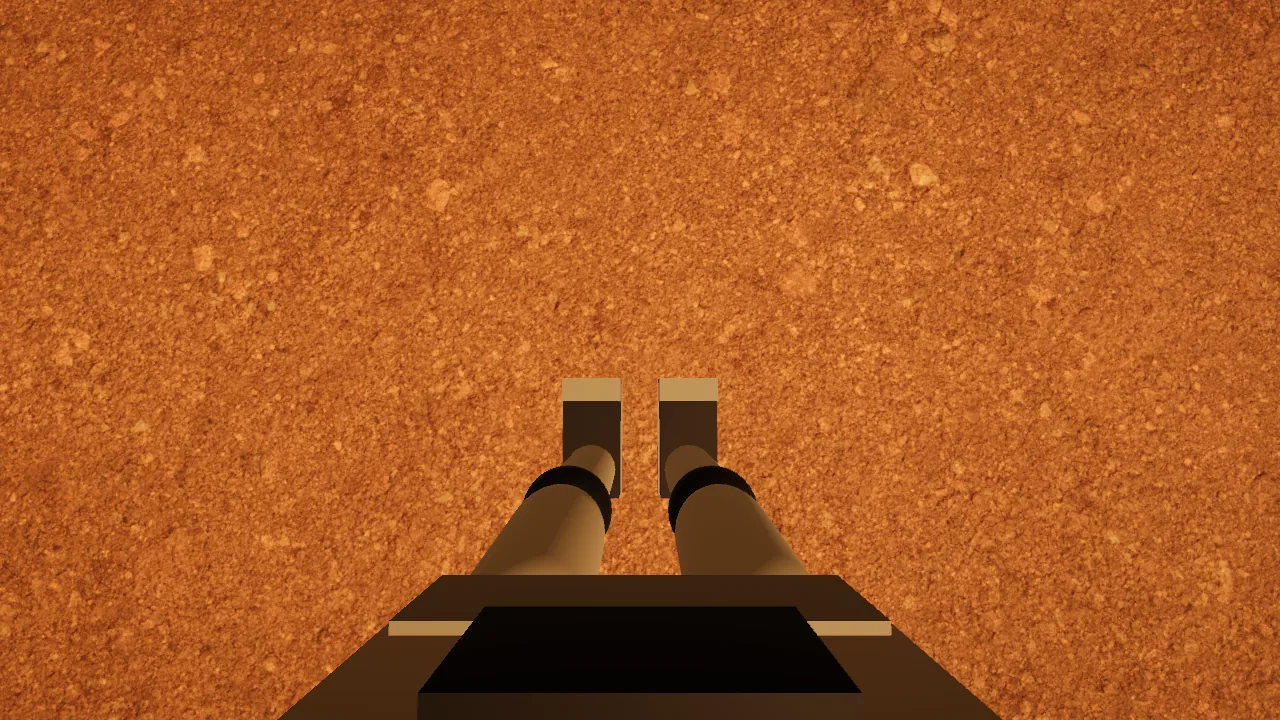
When you do go out yourself, the suit's visor HUD sits on curved glass. It fogs up when you run, your breathing goes from 14 to 32 breaths a minute, and the oxygen runs down. You pass through the airlock, and you see your own legs.
- 5 storm categories
- 40 → 10 m visibility
- 1.5 km valley
- 14 → 32 breaths a minute
This is an early prototype. Most objects are still simple shapes on purpose: the mechanics come first, the art comes later.